Language: English














Industrial Building Strengthening
Carbon Fiber Reinforced Polymer (CFRP)
CFRP strengthening of a factory building's floor slabs and beams: bidirectional carbon fiber strip grids on the slab soffits, longitudinal sheets and U-wraps on the beams.

Project Overview
This project is an existing industrial factory building. Due to function adjustment and increased design load requirements for production, the original reinforced concrete beams and floor slabs failed to meet the current bearing capacity and deflection control requirements.

Current Structural Problems
As is common in active industrial plants, production requirements had outgrown the original structural design:
Slabs short on capacity and stiffness. Evolving production layouts brought higher floor loads — equipment, materials, and operational traffic — beyond what the original slabs were designed to carry. The floor plates needed more capacity and more stiffness to serve the upgraded production use.
Beams short on flexural and shear capacity. The frame beams span the large open bays of the factory floor. Under the increased loads transferred from the strengthened slabs, their flexural and shear capacity fell short of what current verification required.
A working building with real constraints. The strengthening had to be delivered inside an industrial building where space, access, and schedule all mattered. With the factory's full clear height and a finished fair-faced interior, heavy scaffolding and intrusive methods were not practical options.
The Strengthening Scopes
1. Slabs — CFRP

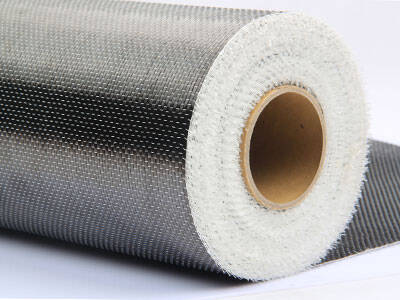
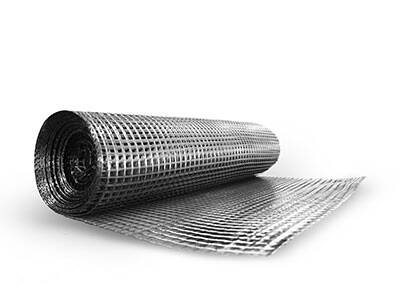
The slab soffits were strengthened with CFRP fabric applied in "#" type.
This grid layout is the efficient answer for slab strengthening: it places carbon fiber where the slab's tensile stresses run, in both directions, rather than treating the whole soffit uniformly. The result:
Higher flexural capacity and stiffness across the floor plate, developed in both spanning directions;
Restraint of existing cracking in the slab soffits under the increased service loads;
Almost nothing added in thickness or weight — the strips and their epoxy add a skin measured in millimeters, so headroom, equipment clearance, and the building's usable volume remain unchanged.
Where the strip grid meets the beams, the fabric continues onto the beam soffits, keeping the reinforcement continuous through the frame.
2. Beams — longitudinal sheets plus U-wraps

The frame beams were strengthened with the classic CFRP combination, clearly visible in the photos as the dark reinforcement running along the beams:
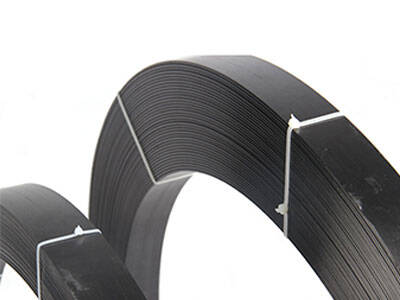
Longitudinal CFRP strips bonded along the beam soffits restore flexural capacity along the span;
Transverse U-wraps bonded up the beam sides provide shear resistance and confine the beam's end zones, forming the regular grid pattern where they cross the longitudinal strips.

After Strengthening
The factory building's floor system is now fully aligned with its production demands:
Slab capacity and stiffness upgraded across the full floor area, with no measurable loss of interior space;
Beam flexural and shear capacity restored by the combined longitudinal-and-U-wrap layout;
The entire scope delivered from mobile platforms, leaving the factory floor unobstructed and the program on schedule;
A strengthened structure that requires no corrosion protection and no ongoing maintenance of the reinforcement itself.

Have a Similar Project? Talk to Us.
Horse Construction is a Shanghai-based manufacturer of structural strengthening materials, with two full product lines trusted on industrial and infrastructure projects in 100+ countries:
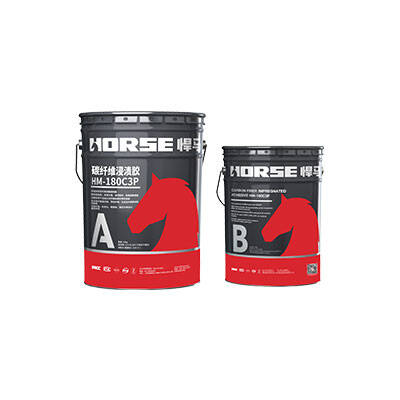
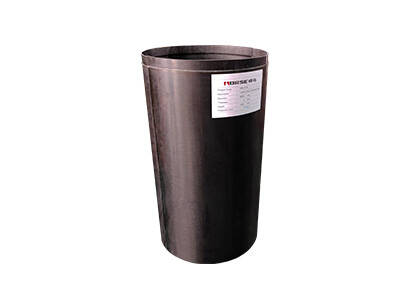
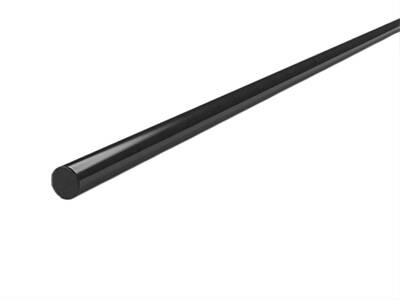
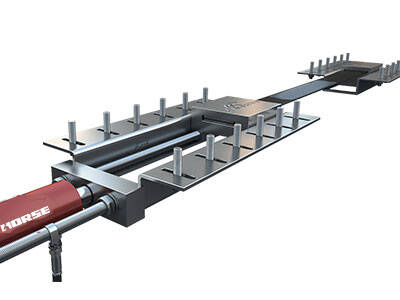
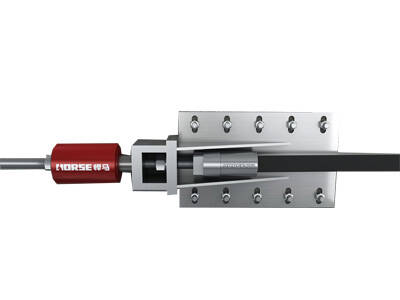
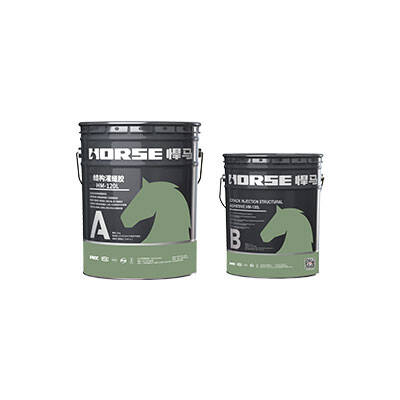
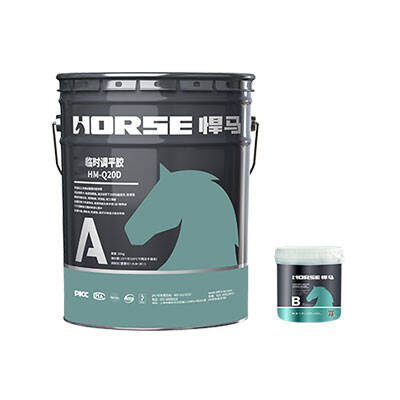
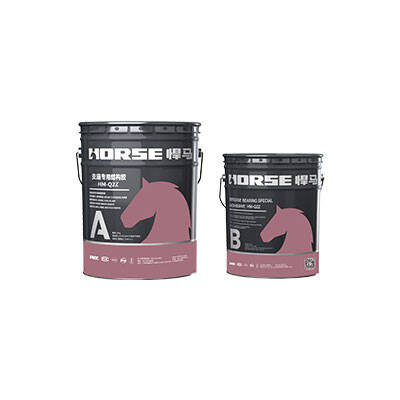
Carbon fiber systems — CFRP fabric, CFRP laminates, pre-stressed CFRP laminate systems, carbon rebars and tendons, with matched saturating epoxies;
Structural adhesives — steel-bonding adhesive, rebar-planting adhesive, crack injection and pouring adhesives, and segment joint adhesive.
If your project involves factory buildings, industrial facilities, or similar strengthening work, contact us — we will do everything we can to support you, from material selection to on-time delivery.